FREE UK POSTAGE OVER £40

Turmeric Vitality
  • SHOP
  • OUR MISSION
  • SUPPORT/FAQ
0
  • SHOP
  • OUR MISSION
  • SUPPORT / FAQ
  • ACCOUNT LOGIN
0

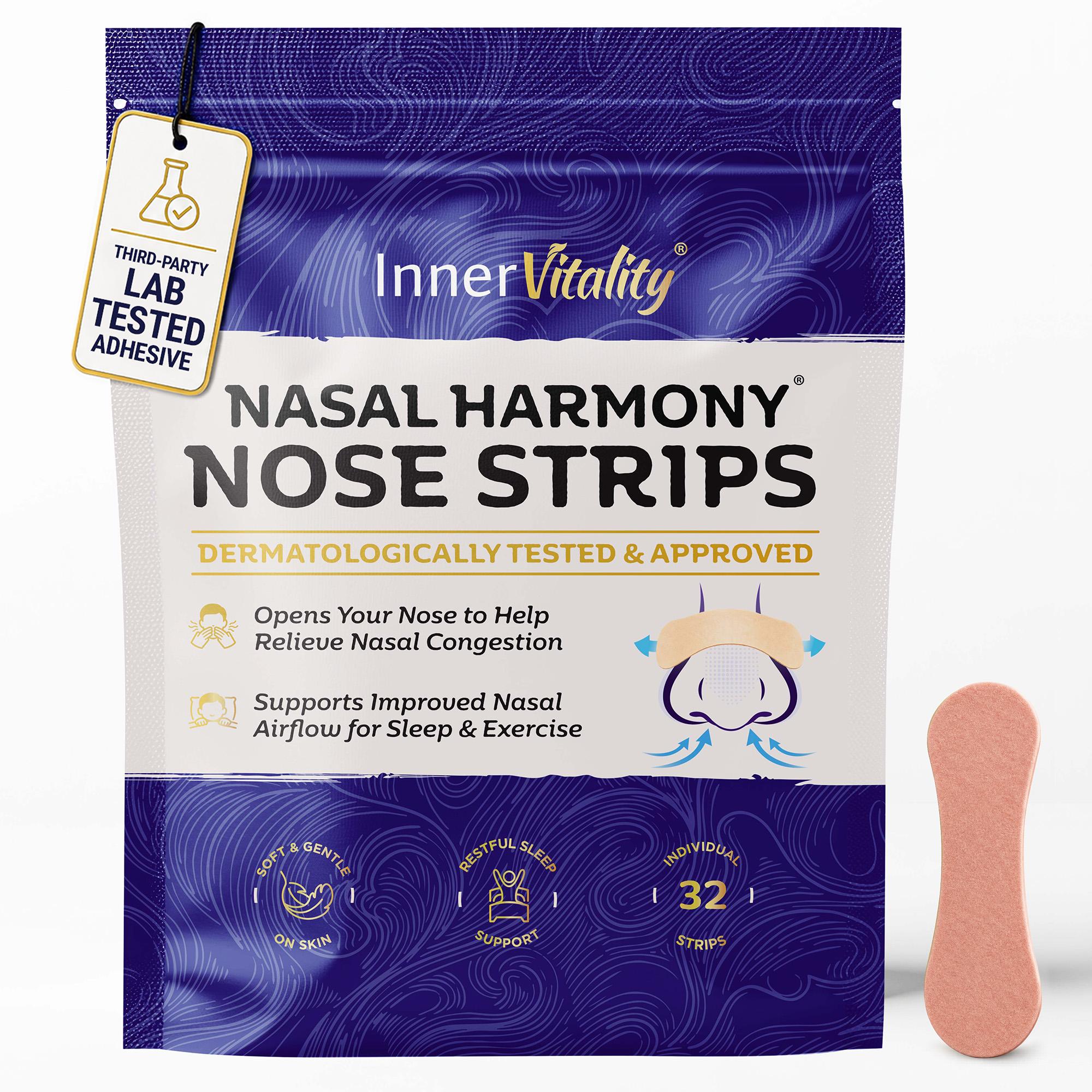
Congratulations on purchasing Inner Vitality Nasal Harmony Strips

Below we have answered some common questions to help you get the best results and some simple tips to help you breathe and sleep better.


If you have any other questions please contact us via the Message Icon at the bottom of your screen.

  • How do nasal strips work?

     Each strip contains flexible spring-like bands. When you place one across the bridge of your nose, those bands gently lift and open the sides of your nostrils, widening the nasal passages. More open space means easier airflow — so you breathe more freely through your nose, day or night.

  • How to apply, step by step:
    1. Start with clean, dry skin — wash and fully dry your nose first (oils, moisturiser and sweat all stop the strip gripping).

    2. Find the spot — the strip sits just above the fleshy part of your nostrils, across the bridge, where the sides flare out.

    3. Peel off the backing by gently twisting the strip so you can easily pull the backing off, place the middle of the strip down first, then press the ends onto each side.

    4. Press and rub firmly for a few seconds so it bonds to your skin.


    Get these right and you'll feel a gentle pull across the bridge — that's the strip doing its job and opening your nose.

  • How to remove the strip

    Peel slowly from one or both ends together, following the direction the strip towards the middle of your nose rather than pulling straight up. Take it gently and it lifts away cleanly and comfortably.


    If you have sensitive skin, soften the strip first. The easiest way is in the shower — warm water loosens the adhesive, so the strip slides off with almost no pull.

    You can also wet the strip with warm water using a flannel, once the strip is soaked with warm water you can slowly peel from the ends inward.

    A faint red mark afterwards can be normal and usually fades within minutes — the more you soak with warm water the less this occurs. Treat removal as kindly as application, and your skin stays comfortable for nightly use.

  • It won't stick / falls off straight away

    The adhesive needs bare, dry skin to grip. 

    • Wash your nose and dry it completely before applying. Water is the obvious culprit, but moisturiser, face oil, makeup, sunscreen and serums are the silent ones — they leave a film the strip cannot bond to.

    • Don't apply straight after a hot shower or while your face is still warm and slightly damp. Give your skin some time to cool and fully dry.

    • Once it's on, press firmly along the whole strip for a good 10–15 seconds. Warmth from your fingers helps it bond.

    • If your skin is naturally oily, wipe across the bridge of your nose with a dry tissue right before applying.

  • It stuck fine but came off during the night
    • Re-check the skin prep above — most overnight failures trace back to a trace of oil or moisturiser at bedtime.

    • Position matters. The strip should sit on the firm bridge of your nose, not too high near your eyes and not too low on the soft, fleshy tip. The soft tip moves too much to hold a strip all night.

    • Press both ends down individually, not just the centre. The ends are where strips lift first.

    • Very humid bedrooms can soften the adhesive over hours — if your room runs warm and damp, that can shorten the hold.

  • It's not opening my nose enough / I'm not feeling much
    • Make sure it's centred on the bridge where the sides of your nose flare out — that's where the lift does the work. A strip sitting too high or too low loses most of its effect.

    • If one side is much more blocked than the other, shift the strip very slightly toward the blocked side.

    • The strip opens your nasal passages — so it helps most when the blockage is in your nose. If you're still struggling, the restriction may be higher up in your airways, which a strip can't reach.

    • Nose shape varies, and so does how much lift each person feels. A gentle pulling sensation across the bridge is the sign it's positioned right and working.


  • I'm wearing one but still snoring
    • Snoring has more than one source. Strips work on the nose, so they help most when restricted nasal airflow is what's driving the snoring.

    • Double-check positioning — slightly too high or too low reduces the lift and the effect.

    • If the snoring continues, it may be coming from the soft tissue of your throat rather than your nose, which is beyond what a nasal strip can address.

    • Combine with mouth tape - Many of our customers use mouth tape to gently hold their mouth closed which can prevent your airways from drying out. Combining mouth tape and nasal strips helps ensure you are breathing correctly for the whole night.  

  • It feels too tight or pulls too much
    • A gentle pull across the bridge is completely normal — that's the strip holding your nasal passages open. It usually fades within a few minutes as you get used to the feeling.

    • If it feels genuinely uncomfortable, reposition it slightly lower on the bridge.

    • Make sure you haven't placed it on the bony top section near your eyes; it's meant for the flexible part lower down.


  • It left a red mark, or pulled at my skin on removal
    • This is nearly always dry removal. Never pull a strip straight off.

    • Soften it first — in the shower, or with a warm, damp cloth held over it for a few seconds. Warm water gently loosens the adhesive.

    • Then peel slowly from both ends inward toward the centre, in the direction of the strip, not upward away from your skin.

    • A brief mark after removal can be normal and fades quickly. If you get persistent redness or irritation, pause use and contact us.

  • My skin felt irritated after wearing one
    • Always remove slowly with warm water — most irritation comes from the removal, not the wear.

    • Skin varies from person to person. If you've reacted to plasters or adhesives before, try a small patch test on your inner arm first.

    • The strips are hypoallergenic, clinically tested for skin safety and dermatologically approved — but if irritation continues, stop use and contact us so we can offer more advice.

Five Simple Tips to Help You Breathe Easier and Ease Your Body into Deeper Sleep


1. Alternate nostril breathing

A simple, powerful way to quiet a busy mind and prepare your body for rest. Close one nostril with your thumb, breathe in slowly through the open side, then switch and breathe out through the other. Continue alternating for a minute or two. The steady rhythm slows your breathing and leaves you feeling calm, centred and clear. Practised before bed, it also encourages the deeper nasal airways inside the nose to open, so air moves more freely — setting you up for a night of easy, effortless breathing.


2. Breathe through your nose, not your mouth  

Most people slip into shallow mouth breathing without realising. Nose breathing slows and deepens each breath, warms and filters the air, and helps you feel steadier and more composed. Check in with yourself through the day and return to easy nose breathing whenever you notice you've drifted. This is where the strips do their work — keeping your nose open and clear so nose breathing feels natural again, day and night.


3. Extend your exhale  

One of the fastest ways to release tension. Breathe in for a count of four, then out for a count of six. A longer exhale settles the body — it eases a fast heartbeat, loosens tight shoulders and lowers stress within a few breaths. Repeat five or six times whenever you feel wound up. Effective before sleep, or ahead of anything demanding.


4. Diaphragmatic (belly) breathing  

Shallow, high-chest breathing keeps the body tense. Rest one hand on your stomach and breathe so your belly rises and falls, not your chest. These fuller, lower breaths are more relaxing and restorative, easing tension and leaving you calmer. A few minutes is enough to feel the difference — and with your nasal passages open and clear, each breath draws in more freely.


5. Wind down before bed  

The way you breathe as you settle sets the tone for the night. Take a few minutes of slow nose breathing once you're in bed — long, even breaths, letting each exhale release the day's tension. It signals to your body that it's time to rest, helping you settle and breathe freely through the night. Cool, lightly humid air and sleeping slightly propped up make night-time nose breathing easier — and with a strip keeping your nose open, undisturbed sleep comes more naturally.


Shop
Info
Questions
All Products
Postage & Delivery
Contact Us
Blog
Returns Policy
Affiliates
Subscribe & Save
Privacy Policy
Wholesale
FAQ
Terms of Use
Klarna

© Copyright. All rights reserved 

© 2025 Turmeric Vitality. Nourishing Vitality Ltd, 27 Old Gloucester St, London, WC1N 3AX 

  •  
  •